Smart Rotary Cutoff (RCO) Drive is a digital signal processor (DSP) based variable-speed drive with an embedded software block to control a rotary cutoff.
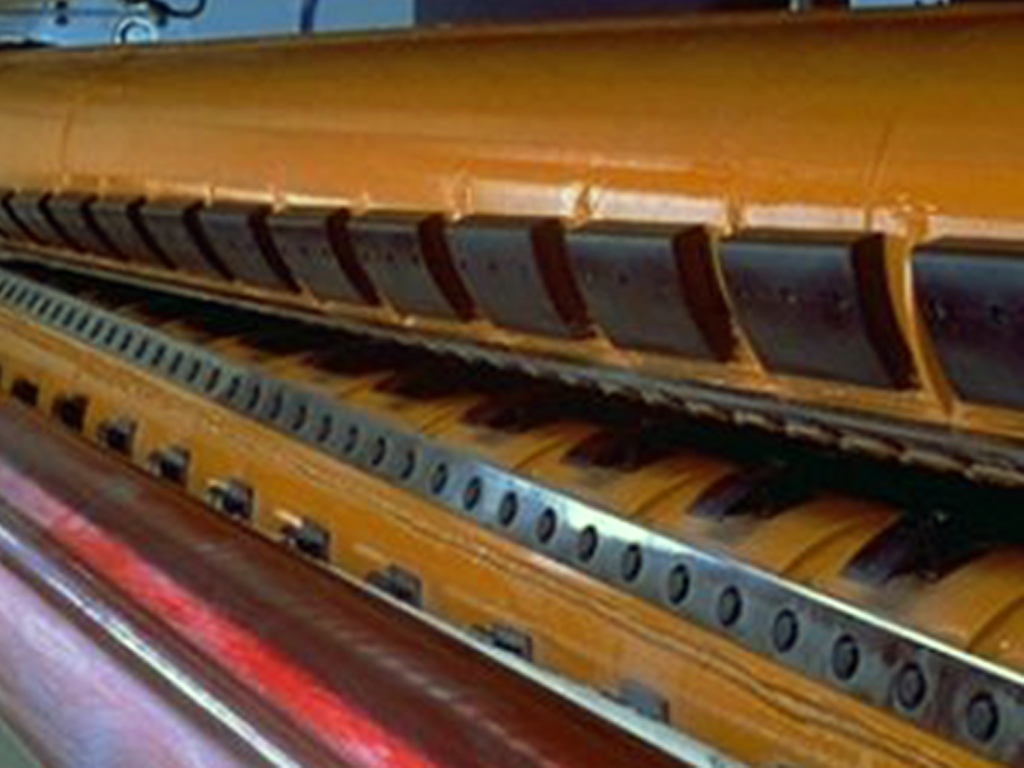
Smart Rotary Cutoff (RCO) Drive is a digital signal processor (DSP) based variable-speed drive with an embedded software block to control a rotary cutoff. The program offers many programmable features that enable OEMs, integrators, and users to customize the functionality of the software to the application.
The primary characteristics of our rotary cutoff control are dynamic feedback sourcing, maximum line velocity calculations, real-time trackers, communication protocols, many inputs, and output options, among others.
Purpose-built control features engineered for precision, flexibility, and throughput on every rotary cutoff application.
The rotary cutoff control cuts a continuously moving web of material into specified lengths. A measuring wheel is used to track web movement. Two different modes offer the choice of cutting prescribed lengths or cutting relative to printed registration marks using a mark detector to scan the web.
Windowing features minimize spurious mark errors during registration cutting.
The drive can search for a user-defined pattern of marks on the web. When a pattern is recognized, the cutoff makes a cut at a specific location relative to the last mark in the pattern.
A pattern tolerance setup establishes the degree to which the distance between consecutive marks can vary from the set distance and still be considered a valid part of the pattern.
Two simulation tools facilitate setting up, testing, and troubleshooting a rotary cutoff system. A line simulator makes it possible to run the cutoff without a web by simulating the feedback that the measuring wheel or pull roll would provide as the line ramps up, ramps down, or runs at speed.
A mark detector simulator provides marks at a specified separation to allow testing in cut-to-mark mode.
Two different part lengths and batch sizes can be specified at once, allowing the operator to set up the next order while the current one is running. In cut-to-mark mode, batches also specify the mark offset and up to eight pattern edges.
Orders change automatically at the end of a batch or when requested by the operator. A customizable early warning feature indicates when a batch is nearly complete. A single length may also be produced indefinitely.
A micro adjust feature compensates for length errors caused by wear or build-up on the measuring wheel or rolls. The operator enters the measured length of a part, and the program recalculates the correct measuring wheel circumference to bring the cut and requested lengths into agreement.
A customized tuning approach reduces the cut error during line velocity changes to minimize bad parts and scrap caused by line stops.
The cutoff can follow line speed feedback from two different sources and switch between them "on the fly" to enable tailout and line thread operations.
The control supports both single- and dual-drive and motor operation. If two motors are coupled to the knife, the user must arbitrarily choose one drive as the master and the other as the slave.
The program calculates the maximum velocity at which the line can operate based upon sheet length. The velocity is computed using a number of parameters that describe the knife, knife motor, and knife drive.
Programmable limit switch (PLS) outputs replace mechanical cams by electronically following the position of the rotary cutoff.
Talk to our engineers about the Smart Rotary Cutoff Drive for your paper converting application.
We are proud to partner with some of the most respected names in paper converting and industrial processing.